

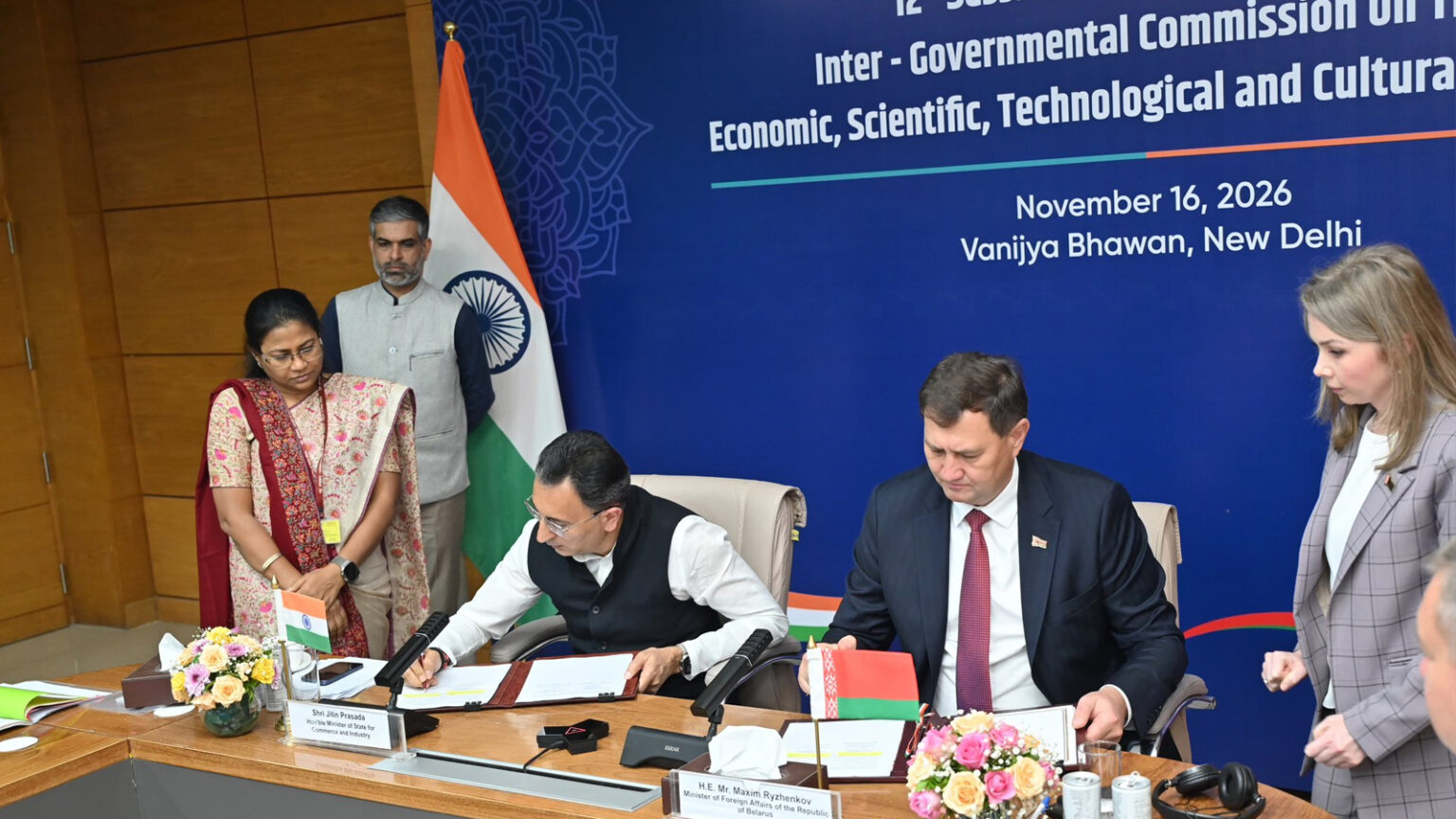

New Delhi, November 17: India and Belarus are looking to expand their cooperation in science, research and technology following the signing of a new agreement between the Council of Scientific and Industrial Research (CSIR) and the National Academy of Sciences of Belarus (NASB).
The agreement, known as the Second Programme of Cooperation, will remain in force from 2027 to 2029 and is aimed at creating more opportunities for scientists and research institutions in both countries to work together.
The programme was signed in New Delhi on November 16 by CSIR Director General Dr. N. Kalaiselvi and Dr. A. V. Trukhanov, Deputy Chairman of the Presidium of the National Academy of Sciences of Belarus.
Under the arrangement, both sides will encourage joint research, exchange scientific knowledge and expertise, and explore opportunities for developing new technologies. The partnership will also help researchers from the two countries collaborate on projects in areas of shared interest.
The latest agreement builds on the cooperation established through an MoU signed in May 2023. During the first programme covering 2024–2026, the two institutions invited research proposals and selected seven joint projects in October 2024. These projects are currently being implemented.
Taking the partnership forward, CSIR and NASB have proposed launching another joint call for Research, Development and Innovation proposals from November 27, 2026. The initiative will allow researchers from India and Belarus to submit proposals for projects in mutually identified priority areas.
Speaking on the occasion, Dr. Kalaiselvi stressed the importance of sustained international cooperation in advancing scientific research and innovation. She highlighted the potential for researchers from both countries to combine their knowledge and capabilities to develop solutions with practical applications.
Dr. Trukhanov also expressed interest in expanding institutional ties, including the possibility of setting up joint laboratories between CSIR and NASB. Such facilities could provide researchers with opportunities to work together on scientific projects and take promising research towards industrial applications.
His visit to India from November 15 to 18 is also connected with the 12th meeting of the India-Belarus Intergovernmental Commission on Cooperation in Economy, Trade, Industry, Science, Technology and Culture, along with the India-Belarus Business Forum.
The renewed agreement reflects the efforts of both countries to take their scientific relationship beyond institutional exchanges and encourage research that can lead to useful technologies, innovation and industrial development.
With the new programme set to run for three years, India and Belarus will have a wider framework to bring their research communities together and explore fresh areas of scientific cooperation.
