

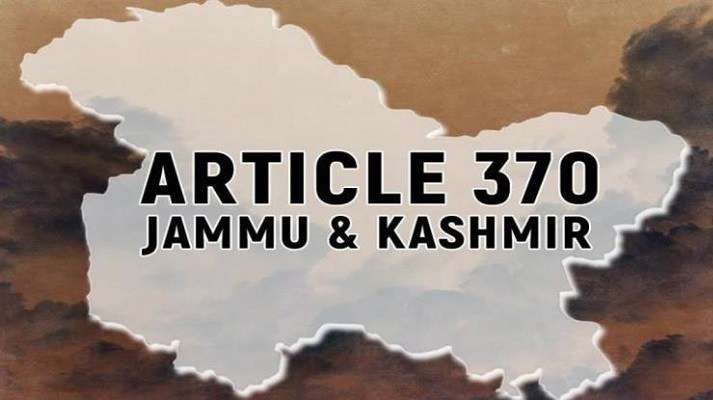

On August 5, 2026, seven years will have passed since the constitutional changes relating to Article 370 were introduced. For people outside Jammu and Kashmir, the anniversary may be viewed mainly through the language of law, politics and constitutional history. For those of us who live here, however, its meaning is also found in everyday experiences: a new road becoming operational, a train reaching closer to home, a hospital expanding its services, tourists exploring previously overlooked destinations, and young people imagining opportunities within the region rather than always looking outside it.
I write neither as a politician nor as an expert attempting to defend a political position. I write as an ordinary citizen who has lived through these years and has watched Jammu and Kashmir gradually acquire a new sense of movement.
The transformation has not occurred through one dramatic event. It has unfolded through hundreds of visible and less visible changes in connectivity, public infrastructure, tourism, healthcare, education, digital governance and economic activity.
Perhaps the most powerful symbol of this change is the completion of the Udhampur-Srinagar-Baramulla Rail Link. For generations, the idea of connecting the Kashmir Valley with the rest of the country through an all-weather railway appeared distant. Today, the Chenab Rail Bridge, the world’s highest railway arch bridge, and the Anji Khad Bridge, India’s first cable-stayed railway bridge, stand as evidence that geographical difficulty need not remain a permanent barrier.
The railway connection is not merely an engineering achievement. It has practical meaning for students, patients, traders, tourists, pilgrims and families. The introduction of Vande Bharat services has considerably shortened the journey between Katra and Srinagar, while the extension of services towards Jammu has made rail travel more convenient for residents across the region.
For an ordinary citizen, such connectivity changes one’s sense of distance. Kashmir no longer feels as isolated during difficult weather. Farmers and traders can hope for more reliable movement of goods. Tourism operators gain greater confidence in planning longer seasons. Families receive another safe and comfortable travel option.
Road and tunnel infrastructure has also altered the experience of travelling within Jammu and Kashmir. Journeys that were once uncertain, exhausting or dependent heavily upon weather conditions are becoming more predictable. Better highways and tunnels are gradually bringing districts, villages and tourist areas closer to major urban centres.
These projects may be recorded in official documents as infrastructure expenditure, but their true importance is better understood through time saved, easier access to hospitals, improved movement of agricultural produce and greater mobility for young people seeking education or employment.
Tourism has witnessed another visible expansion. Kashmir has long been internationally recognised for its natural beauty, while Jammu has traditionally attracted large numbers of pilgrims. In recent years, however, tourism has begun to acquire a broader character. Visitors are exploring border areas, rural destinations, heritage sites, trekking routes and lesser-known locations.
Homestays, local taxis, small restaurants, guides, handicraft sellers and rural entrepreneurs are becoming part of the tourism economy. This is important because tourism creates opportunities without requiring every young person to leave his or her hometown.
Official assessments place tourism’s contribution at around seven per cent of Jammu and Kashmir’s economy, with approximately 1.7 crore visitors being received annually in recent years. Improved aviation and surface connectivity are expected to support further growth.
What matters to a citizen is not merely the number of tourists. It is the confidence created when hotels remain occupied, new destinations appear on travel itineraries and local families find livelihoods connected with hospitality, transport, food, crafts and adventure tourism.
Healthcare infrastructure has also expanded significantly. The establishment of AIIMS Vijaypur in Jammu, the development of AIIMS Awantipora and the functioning of newer government medical colleges have widened the region’s medical and educational capacity. MBBS teaching at AIIMS Jammu began before its permanent campus became fully operational, while new medical colleges in districts such as Anantnag, Baramulla, Rajouri, Doda and Kathua have helped take medical education beyond the traditional centres of Jammu and Srinagar.
For families in Jammu and Kashmir, access to specialised healthcare has always been a major concern. Many patients previously had to travel to Chandigarh, Delhi or other cities for consultation and treatment. Every new medical institution, diagnostic facility or specialised department reduces that dependence and brings confidence closer to home.
The spread of medical colleges also has a long-term social impact. It creates opportunities for students, generates employment for doctors and supporting staff, strengthens district hospitals and gradually improves the availability of healthcare in areas that were historically underserved.
Digital governance is another area where residents can feel a difference. Many public services that once required repeated visits to government offices, physical files and long waiting periods are increasingly available online. Certificates, applications, payments, grievance systems and municipal services are gradually moving towards digital platforms.
These changes may appear routine when viewed individually, but collectively they change the relationship between the citizen and the administration. Technology can reduce travel, paperwork and dependence on intermediaries. It can also bring greater transparency by allowing applications and payments to be tracked.
As someone associated with technology and public infrastructure, I have seen how digital systems can make governance more accessible. Their real success is not measured by the number of portals launched, but by whether an elderly person, a student, a shopkeeper or a resident of a distant village can obtain a service without unnecessary difficulty.
Economic activity is also becoming more diverse. Jammu and Kashmir’s economy continues to depend heavily upon government employment, agriculture, horticulture, tourism and small businesses. Yet there is now greater discussion about entrepreneurship, food processing, logistics, renewable energy, information technology, start-ups, film production and value addition to local products.
The Jammu and Kashmir Economic Survey 2025-26 estimates real Gross State Domestic Product growth at 5.82 per cent. Such figures do not mean that every household experiences prosperity equally, but they indicate continuing economic expansion and provide a foundation upon which employment and enterprise can grow.
The most encouraging change is perhaps psychological. For many years, Jammu and Kashmir was spoken about mainly in the language of conflict, uncertainty and missed opportunities. Today, conversations increasingly include highways, railways, tourism circuits, universities, sports, investment, start-ups and urban development.
Young people are participating in competitive examinations, sporting events, skill programmes, cultural initiatives and entrepreneurship. Local products are reaching wider markets. New infrastructure is making remote areas more visible. The region is gradually being discussed not only for its problems, but also for its possibilities.
This does not mean that every challenge has disappeared. Transformation in a mountainous and historically complex region cannot be completed in seven years. Projects must be maintained after inauguration, employment opportunities must continue to expand, environmental concerns must remain central and development must reach villages as meaningfully as it reaches cities.
Yet an anniversary is also an occasion to acknowledge progress honestly.
As a citizen, I see the last seven years not as the conclusion of Jammu and Kashmir’s transformation, but as the opening of a larger window of opportunity. The strongest evidence of change is not found in political speeches. It is found in trains crossing mountains once considered impossible to traverse, patients receiving treatment closer to their homes, tourists discovering new destinations, students entering new institutions and public services becoming easier to access.
The constitutional step taken on August 5, 2019, will continue to be examined by historians and legal scholars. Ordinary citizens will judge its legacy through something more immediate: whether their lives become safer, more connected, more dignified and more hopeful.
Seven years later, Jammu and Kashmir appears more connected to the future than at any previous moment in recent memory. The task now is to protect this momentum, ensure that its benefits reach every region and community, and transform today’s infrastructure into tomorrow’s lasting prosperity.
The author is an entrepreneur and media analyst. She can be reached at [email protected]
