

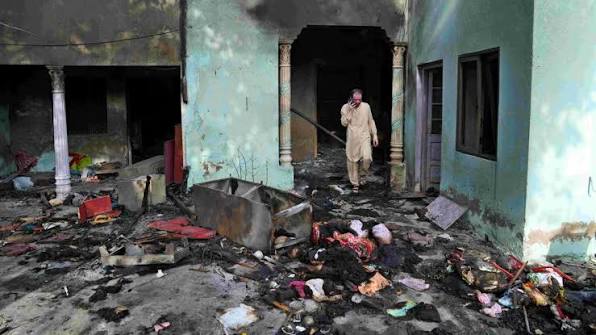

Pakistan’s security establishment and civilian authorities are facing renewed scrutiny over enforced disappearances, arbitrary detention, restrictions on peaceful protest and civilian deaths, as recent incidents from Balochistan and Khyber Pakhtunkhwa to Pakistan-administered Kashmir and across the Afghan border add to longstanding concerns about accountability.
The cases differ substantially in their circumstances and should not be treated as a single campaign. But reports by international human-rights organisations, United Nations officials and independent monitors point to recurring concerns: people disappearing after alleged detention by state personnel, protesters facing sweeping restrictions, activists being held under security legislation, and civilians being killed during security operations or confrontations with law-enforcement agencies.
Human Rights Watch said in its 2026 assessment of Pakistan that authorities had suppressed dissent during the previous year through a crackdown on political opposition, civil society and media. Journalists reporting critically on the government and security forces faced harassment, arbitrary arrest, enforced disappearance and physical attacks, the organisation said.
Enforced disappearance remains particularly contentious in Balochistan.
Amnesty International says Pakistan’s own Commission of Inquiry on Enforced Disappearances recorded 125 new cases nationwide in the first half of 2025, while rights organisations documented additional cases. Families and Baloch rights organisations have long maintained that the official figures substantially understate the scale of the problem.
The allegations frequently implicate state security and intelligence agencies. Pakistani authorities have disputed accusations of systematic disappearances and have also argued that some people listed as missing have joined militant organisations, crossed borders or disappeared for reasons unrelated to the state. The persistence of cases in which people subsequently reappear after periods of unacknowledged detention, however, has kept demands for independent investigation alive.
A recent Amnesty International case illustrates the problem.
Baloch student leader Jiand Baloch disappeared on July 24 and returned home on August 3 after 11 days during which his whereabouts were unknown. Amnesty described the episode as his third enforced disappearance, following earlier disappearances in 2018 and 2024, and said he had been targeted because of his peaceful activism.
The broader numbers remain disputed.
Paank, the human-rights department of the Baloch National Movement, says it documented 556 enforced disappearances and 227 extrajudicial or custodial killings in Balochistan during the first six months of 2026. It recorded 171 people as having been released or recovered during the same period. Paank is affiliated with a Baloch nationalist organisation and its figures have not been independently verified, but its documentation provides one measure of the continuing volume of allegations emerging from the province.
Social-media reporting on X reflects the same pattern of claims. Baloch activist accounts regularly publish names, photographs and locations of people alleged to have been taken by security personnel, while campaigners circulate images of families displaying photographs of missing relatives. Posts associated with the Baloch Yakjehti Committee and other rights networks have also documented protests over disappearances.
Such material is useful for identifying cases requiring investigation but cannot by itself establish responsibility for an individual disappearance. Claims assigning responsibility to the Pakistan Army, Inter-Services Intelligence, Frontier Corps or other agencies require corroboration through witnesses, court records, official documents or independent investigation.
The distinction matters because Balochistan is simultaneously experiencing a violent insurgency. Baloch armed organisations have carried out attacks against Pakistani security forces, civilians and infrastructure. Human-rights allegations against state agencies therefore exist alongside a genuine security threat, but counter-insurgency does not remove the state’s obligations concerning detention, due process and civilian protection.
The suppression of peaceful mobilisation has become another source of concern.
Amnesty reported that Baloch protests were curtailed in March 2025 and cited local activists who said three demonstrators were killed when law-enforcement personnel used unlawful force at a March 21 protest demanding the release of disappeared Baloch activists.
Similar questions have arisen this year in Pakistan-administered Jammu and Kashmir, where the Jammu Kashmir Joint Awami Action Committee, or JKJAAC, has mobilised around electricity prices, subsidised flour, political representation and governance.
Authorities proscribed JKJAAC under anti-terrorism legislation on June 5. Amnesty International said the subsequent crackdown included an internet shutdown, mass arbitrary arrests and deadly use of force. The organisation criticised the designation of a grassroots protest organisation as a terrorist entity and raised concerns about restrictions on peaceful assembly.
The unrest turned deadly.
At least 11 people were reported killed during clashes in Rawalakot on June 7. As the crisis continued, UN High Commissioner for Human Rights Volker Türk called in July for prompt, thorough and impartial investigations into civilian and security-force deaths.
The casualty figures later became contested. The Jammu Kashmir Human Rights Observatory said in August that it had verified 89 civilian deaths connected with the unrest between June 5 and August 5. That total is considerably higher than figures independently established by major international news organisations and should therefore be treated as the organisation’s documented claim rather than an independently confirmed death toll.
Open-source material circulated on X during the crisis showed large demonstrations, road closures, security deployments and later protest marches in Rawalakot, Bagh, Muzaffarabad and other locations. Such imagery helps establish the scale and persistence of mobilisation but does not automatically verify claims about who initiated particular clashes or fired particular shots.
Independent conflict data nevertheless raises questions about the security response. ACLED recorded at least 25 JKJAAC protests in June and said 40% descended into deadly confrontations with security forces. It recorded at least four protests in which security forces used lethal violence against peaceful demonstrators.
Khyber Pakhtunkhwa presents a different human-rights problem.
There, Pakistani forces are confronting an expanding militant threat from the Tehreek-e-Taliban Pakistan and associated organisations. Security personnel themselves have suffered heavy casualties. Yet military operations, air strikes and the growing use of aerial weapons in populated areas have also generated allegations of civilian harm.
The European Union Agency for Asylum, drawing on multiple sources, recorded civilian casualties arising from government security operations during its latest reporting period. Its assessment cited Amnesty International’s concern that authorities had failed adequately to protect civilians and civilian property during operations in KP.
This tension between counter-terrorism and civilian protection now extends across Pakistan’s western border.
On September 21, Pakistan carried out air strikes against what it described as militant hideouts in the border region with Afghanistan. Islamabad said three targets had been destroyed and 28 militants killed, describing the strikes as precise attacks against groups responsible for recent violence in Khyber Pakhtunkhwa.
Afghan authorities and the United Nations provided a different account of the civilian consequences. The UN said three civilians, a man, a woman and a girl, were killed. Kabul condemned the operation and summoned Pakistan’s chargé d’affaires. Pakistan’s claim that 28 militants were killed has not been independently verified.
The September strikes are part of a wider deterioration in Pakistan-Afghanistan relations driven largely by Islamabad’s accusation that the Afghan Taliban allow TTP militants to operate from Afghan territory. Kabul denies providing sanctuary to the group.
Across these regions, responsibility cannot be assigned in identical terms.
The Pakistan Army conducts counter-insurgency and counter-terrorism operations. Intelligence agencies face longstanding allegations concerning enforced disappearances. Police and paramilitary organisations handle demonstrations and arrests. Provincial and federal civilian governments issue administrative orders and maintain the legal frameworks under which many restrictions are imposed. Militant organisations, meanwhile, are responsible for extensive violence of their own.
Treating all abuses as the work of a single institution would obscure those distinctions.
But separating the institutions does not remove the larger accountability problem.
Pakistan’s civilian governments have repeatedly faced criticism for failing to determine what happened to disappeared people, prosecute officials responsible for unlawful detention or excessive force, and establish transparent mechanisms capable of independently investigating the security establishment.
The persistence of the issue is itself significant. Families in Balochistan continue to search for missing relatives. Political and civil-rights movements continue to report arbitrary detention. Protest movements have faced internet shutdowns, anti-terrorism measures and lethal confrontations. Civilians remain vulnerable when counter-terrorism operations move into populated areas.
Pakistan also faces real and escalating security threats. TTP-linked organisations, Baloch insurgent groups and other armed movements have killed soldiers, police officers and civilians. The state has both the authority and obligation to respond to those threats.
The unresolved question is how that power is exercised and scrutinised.
Where people disappear after alleged detention, the state has an obligation to account for them. Where civilians are killed during security operations or protests, credible investigations are required to determine responsibility. Where intelligence or military personnel are accused of violations, effective accountability requires institutions capable of investigating them independently.
That is where Pakistan’s human-rights problem increasingly intersects with its civil-military imbalance. The issue is not simply the scale of force available to the security establishment. It is whether institutions outside that establishment possess sufficient authority to investigate how that force is used, establish responsibility when abuses occur and provide an effective remedy to those affected.
